- 24x7 live Support
- (202) 769-5123

Most organizations already have cybersecurity tools. A Cyber Health Check is not intended to replace them. It is a fast, non-invasive, low-cost way to observe live network traffic and determine whether suspicious connections, hidden anomalies, misconfigurations, or other risks are present.
Network activity begins appearing within minutes of connection, and significant findings are often visible within minutes or hours. The Health Check remains active for 35 days so the organization can observe a complete operating cycle and detect latent or dormant activity - including spyware or command-and-control software that may call home only once every 30 days.
This makes the Health Check a practical first step before a larger cybersecurity investment, an insurance renewal, an interconnection decision, a major network change, or simply when leadership wants evidence that the mission is not operating blind.
1. You do not have real-time visibility into your network.If you’re relying on logs and delayed reports, you’re already behind the adversary.
2. You do not currently detect anomalies or outlier behavior in network traffic.If your tools only alert on known threats, attackers who "live off the land" will remain invisible.
3. Your security tools haven’t found anything concerning in a long time. That’s not always a sign of safety - it could be a sign of blindness.
4. Your network seems slower or is exhibiting unusual behaviors.
Unexplained delays could signal lateral movement, scanning, or beaconing.
5. You allow personal devices (BYOD) to connect to the network.
Even with basic endpoint protections, unmanaged devices introduce serious risk.
6. You have not conducted a live traffic assessment in the past 12 months.
If you’ve never seen your network traffic animated in real time, you may be missing everything.
7. You’re about to sign up for or renew cyber insurance.
Find out what underwriters may uncover—or worse, deny coverage for—before they do.
8.You’re connecting with a new supply chain partner.
A single compromised vendor can become a backdoor to your environment.
9. You’re about to sign an Interconnection Security Agreement (ISA).
An independent live-traffic review can demonstrate diligence or identify issues to address before an interconnection agreement is signed.
10. You’ve had network changes, upgrades, or vendor maintenance recently.
Even routine patching and config changes can leave behind unintended vulnerabilities.
11. Your LAN, server room, or infrastructure areas were recently found unlocked or open.
Physical access can lead to network implants or rogue devices that evade traditional detection.
12. You’re preparing for a third-party or government penetration test.
Identify weak spots and fix them before they’re exploited in a live evaluation.
13. You rely on SIEM, EDR, or firewalls—but not full network visibility.
These tools are vital, but attackers often slip through them. Full packet visibility fills the gap.
14. You’ve experienced unusual outbound traffic patterns or blocked connections.
Even if blocked, attempted connections to foreign adversaries should be investigated.
15. You recently onboarded or offboarded a contractor or third-party IT support firm.
Changes in access rights or the transfer of privileged accounts may create unexpected risks.
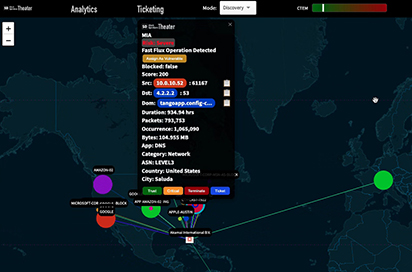
16. You’re consolidating networks after a merger, migration, or office relocation.
Network integration is a prime time for adversaries to exploit overlooked exposures.
17. You suspect that legacy systems are still exposed or unsupported.
End-of-life software and hardware often carry unpatchable vulnerabilities.
18. You’re in a regulated industry with mandatory controls for continuous monitoring.
A Health Check validates readiness, compliance, and internal visibility - all at once.
The Health Check gives leadership and technical teams evidence they can review together:
 A live view of current network activity Detection of anomalies, lateral movement, and beaconing , and other suspicious behavior Validation of unexpected or high-risk outbound communications Visibility into policy gaps, vulnerable services, and misconfigurations No endpoint software agents required - a non-invasive approach using mirrored traffic Findings as they appear, followed by a closing review and executive-level summary at the conclusion of the Health Check
Initial value does not require waiting 35 days. Important activity may become visible within minutes or hours of connection, and findings can be acted upon as they appear. The 35-day observation period remains in place to catch periodic, latent, or dormant activity that a short assessment could miss.
Schedule or purchase a Cyber Health Check, call to discuss your environment, or submit the form below. You do not need to commit to a long-term cybersecurity platform before learning what your network is actually doing. or CALL NOW or FILL OUT THE FORM
or Pay by Phone
Health Check
Privacy Policy Terms of Service
Beyond Detection - Full-Spectrum Support When It Matters Most.

Develop an attorney-client relationship with specialized cyber law counsel well in advance of a serious incident. Enveloping investigative data with privilege is critical in litigation.

Establish a pre-incident relationship to have a ready team experienced in digital forensics and incident response to investigate, contain and remediate a serious cyber-attack.

Third-party insurance experts providing industry leading and affordable insurance for cyber-related exposures and expenses including data breaches, legal defense costs, ransomware attack assistance, and system disruption recovery.
Continue Reading...